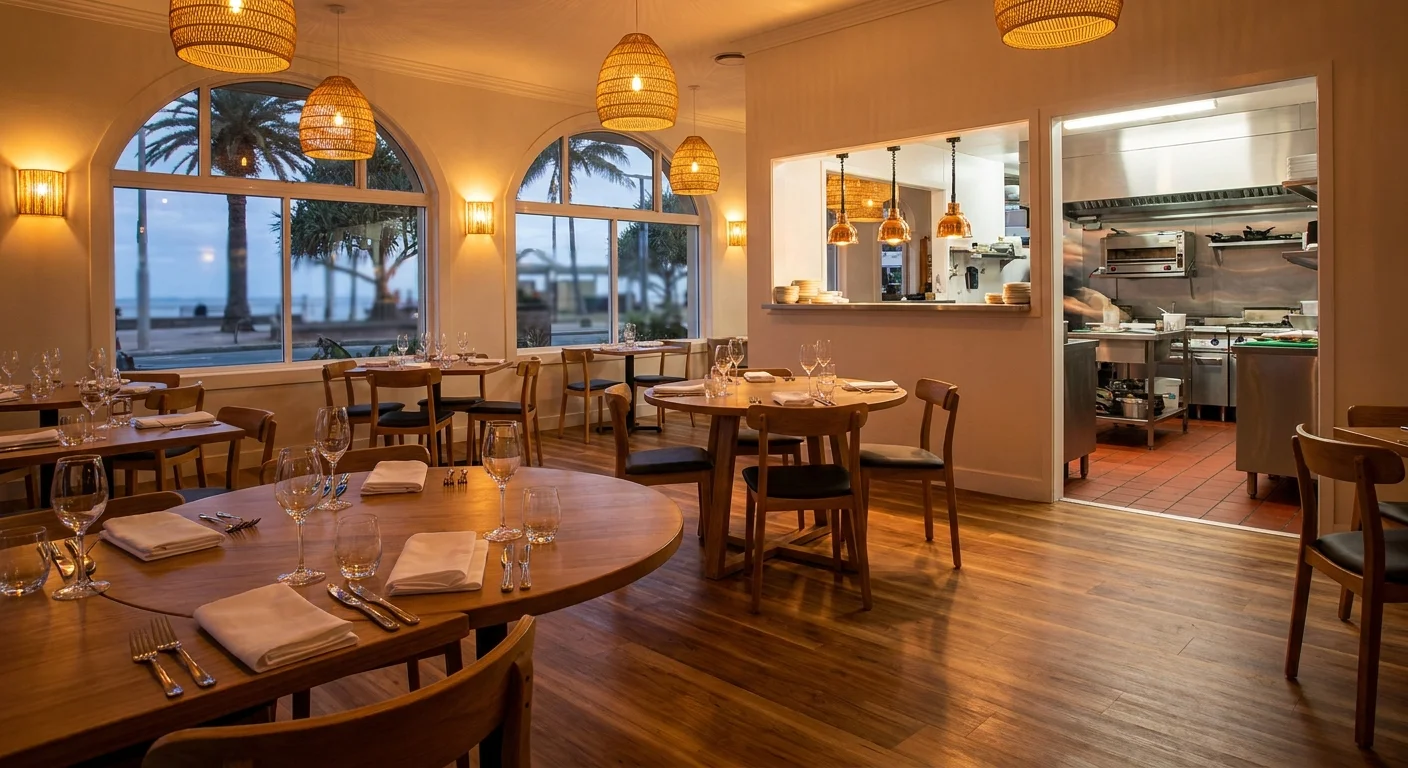
Front-of-house style. Back-of-house compliance. One installer for both.
A restaurant floor has to do two completely different jobs. In the dining room, it sets the atmosphere, absorbs noise and creates the visual foundation for the guest experience. In the kitchen, it must resist grease, withstand industrial cleaning, meet food safety regulations and keep staff safe on their feet for hours at a time.
Most flooring companies treat these as separate problems. Suelo Flooring treats them as one project. We specify, supply and install flooring for every zone in your restaurant — from the front door to the cool room — ensuring the products integrate cleanly at transitions and that the entire installation meets BCA and Food Act requirements.
Dining room and front-of-house flooring
The dining area is where aesthetics and performance intersect. Your floor needs to look exceptional under artificial lighting, handle spilled drinks and dropped cutlery, withstand chair scraping hundreds of times per service and still clean up quickly for the next session.
Luxury vinyl plank for dining rooms
Commercial-grade luxury vinyl plank has become the most popular choice for restaurant dining rooms across Brisbane. Timber-look and stone-look finishes create warm, sophisticated interiors at a fraction of the cost and maintenance of natural materials. Commercial LVP with a 0.55mm+ wear layer handles the traffic, spills and cleaning that restaurant dining rooms demand.
LVP also delivers acoustic benefits. Products with integrated backing reduce impact noise — the sound of heels, dropped items and chair movement — which contributes meaningfully to a comfortable dining environment.
Hybrid flooring for character dining
For restaurants where a warm, natural material feel is central to the brand, hybrid flooring in premium timber-look finishes delivers realistic timber aesthetics with superior dimensional stability. The rigid core construction handles Brisbane’s humidity and the temperature variations of commercial kitchens nearby without the expansion issues of natural timber.
Hybrid floors in restaurant settings are easier to maintain than natural timber — no periodic re-coating required — while still delivering the warm aesthetic that elevates a dining space.
Bar and lounge areas
Bar areas combine the spill exposure of a kitchen with the aesthetic expectations of a dining room. LVP handles this combination well, particularly in darker finishes that mask the visual impact of liquid exposure. For standing bars and lounge areas, hybrid flooring adds warmth and character that suits the relaxed atmosphere of these zones.
Kitchen and back-of-house flooring
Commercial kitchens are governed by Queensland’s Food Act 2006, which requires food premises floors to be:
- Smooth, impervious and free of cracks and crevices
- Easily cleaned and, where necessary, sanitised
- Graded to a floor waste to prevent pooling
These requirements effectively mandate seamless, non-porous flooring systems for commercial kitchen installations.
Epoxy flooring for commercial kitchens
Epoxy and resin flooring systems are the gold standard for commercial restaurant kitchens. A properly specified and installed epoxy system delivers:
- Seamless surface with no joints for bacteria or grease to harbour
- Chemical resistance to industrial cleaning agents and cooking oils
- Slip resistance at R11 to R13 ratings depending on zone and risk assessment
- Thermal resistance to handle hot oil splashes and boiling water spills
- Grading to waste for effective drainage and cleaning
We install epoxy systems with integral coving at wall junctions, creating a continuous surface that eliminates the gaps between floor and wall where contaminants accumulate.
Vinyl sheet for prep areas
Vinyl sheet flooring with heat-welded seams provides a cost-effective alternative for prep areas, dishwashing stations and dry storage zones that still require a seamless, hygienic surface. Commercial-grade vinyl sheet offers good slip resistance, chemical resistance and ease of maintenance at a lower price point than epoxy systems.
Understanding slip resistance ratings
Slip resistance is classified under AS 4586 and expressed as R-values:
| Rating | Application | Typical restaurant zones |
|---|---|---|
| R10 | Dry internal areas | Dining room, office, dry storage |
| R11 | Areas with occasional water | Bar service, wait stations |
| R12 | Areas with frequent water and oil | Dishwashing, prep areas |
| R13 | Areas with significant water and oil | Commercial kitchen, cool room entries |
We specify products that meet or exceed the slip resistance requirements for each zone in your restaurant. Achieving rated slip resistance also depends on proper subfloor preparation — an uneven substrate compromises the performance of even the best surface material.
Brisbane’s restaurant scene
Brisbane’s dining landscape has evolved dramatically. From the established restaurant precincts of Woolloongabba and South Brisbane to the growing food destinations of Helensvale and Hope Island, new restaurants are opening in heritage buildings, repurposed industrial spaces and purpose-built tenancies alike.
Each setting presents different substrate conditions, access constraints and aesthetic opportunities. We have installed restaurant flooring across all of these environments and understand the specific challenges each building type presents.
The Logan and Ipswich corridors are also seeing significant growth in dining venues, particularly around Springfield Central and Springwood, where new residential development is driving demand for quality food and beverage establishments.
Plan your restaurant flooring
The best time to involve a flooring specialist is during the design phase, before you commit to a layout. We can advise on product selection, transition detailing and compliance requirements early — saving time and money during construction. Request a quote or call us on 0426 409 499.
Back to hospitality flooring | Back to all industry sectors.