Restaurant and Cafe Flooring: A Brisbane Business Owner's Guide
Key Takeaways
- Restaurant and cafe flooring must handle spills, heavy traffic, chair scraping, and daily chemical cleaning without looking worn.
- Front-of-house and back-of-house need different products. Trying to use one material everywhere leads to compromises.
- Noise matters more than most hospitality owners realise. Hard floors in a busy restaurant amplify conversation to uncomfortable levels.
- The flooring you choose affects your customers’ perception of your food and brand. It is part of the experience.
Introduction
When Brisbane restaurant and cafe owners plan a new venue or renovation, the flooring decision usually falls somewhere between choosing the coffee machine and picking the paint colour. It should not. The floor is the largest visual surface in your venue. It sets the tone, affects noise levels, influences cleaning costs, and takes more physical punishment than any other element of your fit-out.
Get it right, and your floor quietly supports your brand for a decade or more. Get it wrong, and you are dealing with cracked grout, peeling edges, stained surfaces, or slip hazards that undermine the experience you are trying to create.
This guide covers the practical flooring choices for Brisbane hospitality venues, broken down by the areas that matter: front-of-house dining, back-of-house kitchen, bathroom, and outdoor dining.
Front-of-House: Where Aesthetics and Durability Collide
Your dining area floor needs to look good, feel right, handle constant traffic, survive spills, and be easy to clean at the end of service. That is a demanding brief.
Luxury Vinyl Plank
Luxury vinyl plank has become the most popular front-of-house flooring for Brisbane restaurants and cafes. The reasons are practical.
- Waterproof construction handles spills from drinks, sauces, and cleaning
- Timber and stone looks that suit virtually any hospitality aesthetic
- Commercial-grade wear layers resist chair leg scratching
- Fast installation minimises fit-out downtime
- Easy to clean with standard mopping
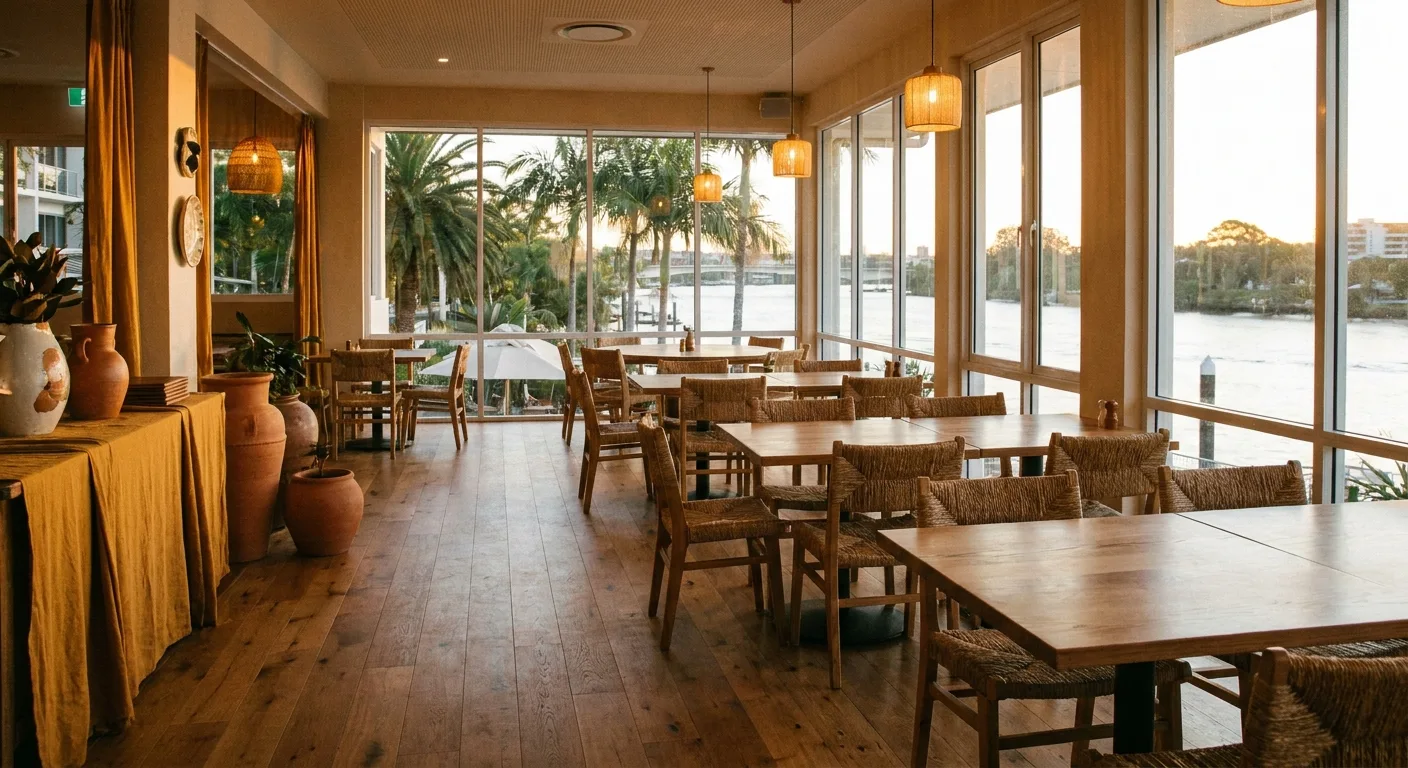
For a modern cafe or casual restaurant, LVP in a warm timber tone creates a welcoming atmosphere at a fraction of the cost of real timber. Herringbone and chevron patterns add a design element that lifts the space from standard to noteworthy.
Price range: $55 to $110 per square metre installed.
Hybrid Flooring
For venues where authenticity matters — fine dining, wine bars, boutique cafes — hybrid flooring delivers warmth and character with realistic timber aesthetics that register with customers, even subconsciously. Modern hybrid planks replicate natural grain variation convincingly while offering superior water resistance and dimensional stability.
Hybrid flooring uses a rigid SPC or WPC core with a high-definition timber-look wear layer. This construction handles Queensland’s humidity without the expansion issues that plague natural timber, and requires less maintenance than engineered timber.
Considerations:
- Slightly higher cost than standard LVP
- Waterproof surface, though standing water should still be managed at joints
- No refinishing required — the wear layer determines lifespan
- Not suitable for commercial kitchen areas (use epoxy or vinyl sheet)
Price range: $50 to $100 per square metre installed.
Polished Concrete
Industrial-style cafes and modern restaurants increasingly use polished concrete. It is durable, easy to clean, and makes a strong visual statement. But it has drawbacks for hospitality.
- Very hard underfoot (staff fatigue over long shifts)
- Noisy (amplifies every sound)
- Cold in winter
- Requires professional sealing and resealing
If you love the concrete aesthetic but want more comfort, consider a concrete-look LVP. It captures the visual impact without the noise and fatigue issues.
Tiles
Ceramic and porcelain tiles are the traditional restaurant flooring choice. They are durable, waterproof, and available in every style imaginable. But grout lines remain the weak point. In a busy restaurant, grout stains, cracks, and harbours bacteria over time.
Large-format tiles (600mm and above) with rectified edges and epoxy grout minimise this issue but do not eliminate it. If you choose tiles, budget for periodic grout maintenance.
Back-of-House: The Kitchen Floor
The kitchen floor has completely different requirements from the dining room. Aesthetics are irrelevant. Performance, safety, and hygiene are everything.
Epoxy and Resin Systems
Epoxy and resin flooring is the gold standard for commercial kitchen floors. A seamless, jointless surface with anti-slip aggregate, chemical resistance, and integrated coving.
Vinyl Sheet
Commercial vinyl sheet flooring is a more affordable alternative to resin for smaller kitchens and cafe prep areas. Heat-welded seams create a near-seamless surface that meets food safety requirements.
Vinyl sheet handles daily mopping, chemical cleaners, and moderate foot traffic well. It is not as tough as epoxy under heavy equipment or extreme heat, but for a cafe kitchen or small restaurant, it is a practical and cost-effective choice.
Price range: $40 to $85 per square metre installed.
Bathrooms and Wet Areas
Restaurant bathrooms take surprising punishment. High foot traffic from customers wearing everything from heels to work boots. Water and soap on the floor. Chemical cleaning products used daily.
The floor must be:
- Slip-resistant (even when wet)
- Waterproof
- Easy to clean
- Visually consistent with your venue’s style
LVP, vinyl sheet, or porcelain tiles with anti-slip ratings all work well. Avoid natural stone (too porous without heavy sealing) and timber (moisture damage risk).
Outdoor Dining
Brisbane’s climate makes outdoor dining a year-round feature for many venues. Outdoor flooring needs to handle direct sun, rain, temperature swings, and furniture dragging.
Common options:
- Composite decking for elevated areas
- Porcelain pavers for ground-level courtyards
- Sealed concrete for low-maintenance areas
- Rubber pavers for rooftop spaces
Outdoor flooring is typically outside the scope of interior commercial flooring installers and is better handled by landscaping or building specialists.
The Noise Problem Nobody Warns You About
Here is something most hospitality fit-out guides overlook: hard floors make restaurants louder. Much louder.
When every surface is hard — tile floor, concrete walls, glass windows — sound bounces and amplifies. Conversations compete with each other. Customers raise their voices. The noise compounds.
Research consistently shows that excessive noise is one of the top complaints in restaurant reviews. It affects the dining experience more than most owners appreciate.
Solutions:
- Carpet tile or rugs in specific zones to absorb sound
- Acoustic underlay beneath LVP (adds 3 to 5 dB of noise reduction)
- Soft furnishings (upholstered seating, curtains, acoustic panels) to complement the flooring choice
- Zoning with different materials to break up the reflective surface area
If you are fitting out a high-energy casual restaurant, noise might be part of the atmosphere. But for fine dining, cafes, or venues where conversation is the point, acoustic management matters.
Flooring by Venue Type
| Venue Type | Front-of-House | Kitchen | Budget (per sqm) |
|---|---|---|---|
| Fine dining | Hybrid flooring or premium LVP | Epoxy resin | $60 - $120 |
| Casual restaurant | LVP timber-look | Epoxy or vinyl sheet | $55 - $110 |
| Cafe | LVP or polished concrete-look LVP | Vinyl sheet | $50 - $90 |
| Bar | LVP or sealed concrete | Vinyl sheet | $50 - $100 |
| Fast food / takeaway | Commercial LVP or vinyl sheet | Epoxy | $45 - $90 |
Planning Your Hospitality Flooring Project
- Define your zones. Map out front-of-house, kitchen, bathrooms, storage, and outdoor areas. Each may need a different product.
- Set your aesthetic direction. The floor anchors the visual design. Choose it early, not as an afterthought.
- Get a professional site inspection. Subfloor condition, moisture levels, and existing flooring all affect what products will work. Floor preparation may be needed before any new product goes down.
- Consider the full lifecycle cost. A cheaper floor that needs replacing in five years costs more than a quality floor that lasts fifteen.
- Plan for installation timing. Coordinate flooring installation with your fit-out schedule. Some products need cure time before other trades can work on top of them.
Businesses on Brisbane’s southside and the Northern Gold Coast have access to a growing number of hospitality-focused suppliers and installers. The local market understands the specific demands of Southeast Queensland’s climate and food safety regulations.
Conclusion
Restaurant and cafe flooring is not a commodity decision. It affects how your venue looks, sounds, feels, cleans, and lasts. The most successful hospitality fit-outs treat flooring as a design and operational decision made early in the planning process, not a last-minute selection from whatever is in stock.
Choose the right product for each zone, invest in proper preparation, and your floor will serve your business well for years.
Opening or renovating a restaurant or cafe in Southeast Queensland? Suelo Flooring has specialist experience in hospitality flooring across Brisbane, the Gold Coast, Logan, and Ipswich. Contact us for a free site assessment and quote.
Related Articles:
Suelo Flooring
Suelo Flooring delivers specialist commercial flooring across Southeast Queensland. An experienced, dedicated team manages every project from consultation to handover.
About Suelo Flooring